
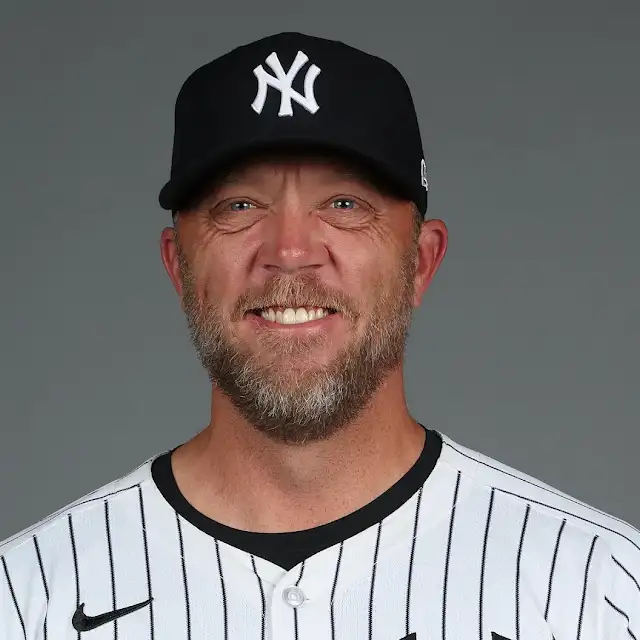
The Yankees will have to find a new leader for one of the most important positions within their development system.
Shelley Duncan will leave his position as Triple-A Scranton/Wilkes-Barre manager to join the Boston Red Sox Major League coaching staff.
The movement has an additional ingredient because it is precisely New York's main division rival, but its true importance goes far beyond the historic rivalry between Yankees and Boston.
Duncan had been working directly with the players who were only one step away from reaching the Bronx and had become one of the most recognized figures within the organization's development system.
Now the Yankees lose that leader just as a new generation of young players begins to have more weight within the future of the team.
Shelley Duncan makes the leap to a major league coaching staff
Duncan will join Manager Chad Tracy in Boston.
At the time of contracting, the Red Sox had not yet publicly defined what their specific role will be within the coaching staff.
Boston had pending moves in different positions of his staff, so Duncan will now have the opportunity to return to the Major League atmosphere from a coaching role.
For him it represents a logical professional advance after several years directing in the minors.
For the Yankees, on the other hand, it means replacing the person who during the last four seasons was in charge of managing the last step before the Major Leagues.
Four seasons leading Scranton/Wilkes-Barre
Duncan took command of the Scranton/Wilkes-Barre Railriders before the 2023 season.
Since then he worked with numerous players who subsequently received opportunities with the Yankees.
His stage ended with a record of 327 wins and 263 losses.
In 2025 he received the International League Manager of the Year award after leading the Railriders to the circuit championship series.
His job was not simply to win games.
That is a fundamental aspect to understand the importance of a Triple-A manager.
At that level, the results matter, but developing and preparing players to respond immediately when they receive a major league call can be even more important.
Triple-A has a different function within Yankees
Scranton/Wilkes-Barre works as the last station before Yankee Stadium.
There are prospects who need to complete their development.
Also major league players who are in rehab.
players who have been temporarily sent to minors.
and veterans trying to return to the highest level.
The manager has to manage all those situations at the same time.
You can't always build a lineup thinking solely of winning that night.
Many times you have to prioritize the development of a prospect or prepare a player for a specific need of the big team.
Duncan lived with this process for four years.
Worked with players who are now part of the future of Yankees
During his time at Scranton, Duncan had direct contact with different players who subsequently reached the New York roster.
Among them are names like Ben Rice and Cam Schlittler, two players who ended up acquiring important responsibilities with the big team.
That does not mean that Duncan is individually responsible for the complete development of those players.
The minor league system works through a much larger group of instructors, coordinators, analysts and specialists.
But Triple-A manager plays an important role in the last transition.
Especially in teaching players to handle results, pressure, daily preparation and constant changes of functions.
The exit comes at an important moment for the organization
The Yankees are trying to integrate more young talent into the major league roster.
For years, one of the criticisms around the organization was its difficulty in turning certain prospects into important players of the main team.
That started to change.
Ben Rice managed to settle offensively.
Cam Schlittler became an important piece of pitching.
George Lombard Jr. quickly advanced into the system.
Spencer Jones received opportunities at the highest level.
And there are other young people who could get close to the Bronx for the next few seasons.
That is why the election of the next Triple-A manager will be important.
Boston incorporates knowledge of the Yankees system
There is also an inevitable aspect of movement.
Duncan reaches a direct rival with a deep understanding of the inner workings of New York's minor leagues.
Meet players.
knows development processes.
Meet different trends within the organization.
And he has worked directly with an important part of the talent that is currently reaching the Major Leagues.
That doesn't mean Boston is going to get some kind of extraordinary advantage simply by hiring him.
The teams know their rivals widely and there is a huge amount of information available around each organization.
But it does mean that the Red Sox are incorporating a coach with direct experience into one of their main rivals.
Duncan knows very well what it means to be Yankee
His relationship with New York did not start as a coach either.
The Yankees selected Duncan in the second round of the 2001 draft.
After several years developing within the system, he reached the Major Leagues in 2007.
He played parts of three seasons with New York before continuing his career with Cleveland and Tampa Bay.
After retiring as a player, he began a second career inside baseball.
He worked as a manager at different levels of the Arizona system.
He also went through the Blue Jays as the Major League Field Coordinator and later worked with the White Sox in the area of analysis.
All that tour ended up taking him back to the organization that had originally selected him.
His return to Yankees began in 2023
When Duncan returned to lead Scranton/Wilkes-Barre, he returned to an organization he knew from different perspectives.
had been a prospect.
He had been a Major League player.
And now he returned with accumulated experience as an instructor and leader.
During his time with the Railriders he spoke publicly about how special it was for him to be part of the Yankees again.
The relationship seemed to fit.
But professional growth also generates opportunities.
Boston now offers you the ability to work directly within a major league coaching staff.
The Red Sox are building the Chad Tracy staff
Duncan's arrival is part of Boston's adjustments around Chad Tracy.
Tracy had previously worked as manager of Triple-A Worcester and directly knew Duncan as a counterpart within the International League.
That means the new Boston manager isn't just incorporating a known name.
He is adding someone whose work he could observe from the other dugout for several years.
The professional relationship between the two helps to understand why Duncan now appears within the new Red Sox coaching staff.
What does Yankees really lose?
The output does not represent the loss of a star player.
Nor does Aaron Boone's roster change immediately.
But successful organizations depend on many people who work away from major league cameras.
Scouts.
coordinators.
instructors.
Analysts.
Minor League Managers.
They are the ones who prepare a good part of the talent that Aaron Boone later receives.
Duncan belonged to that group.
And it was also located on the last level before New York.
Yankees must now carefully choose their replacement
The decision on the next manager of Scranton/Wilkes-Barre should not simply be seen as filling a vacancy.
The next leader will have to work with an organization that is betting more and more on its internally developed players.
He will have to constantly coordinate with the Major League coaching staff.
Prepare players for possible promotions.
Manage rehabilitations.
work with important prospects.
And also handle the frustration of players who can get caught between Triple-A and Major Leagues.
It is a complex function.
The Yankees: a loss that should not be exaggerated, but not ignored either
from the perspective of The Yankists, Shelley Duncan's departure does not mean that the New York development system will automatically suffer a recoil.
The Yankees have a much larger structure than a single person.
But it would not be correct to treat his march as an irrelevant movement.
Duncan produced results.
He worked for four seasons with players close to the Major Leagues.
He was recognized as Manager of the Year.
And he knew the system deeply.
Now all that experience goes straight to Boston.
The responsibility of the Yankees will be to find someone capable of maintaining the continuity of a development process that has begun to produce important players for the major league roster.
The rivalry will now have another familiar face
And there is, finally, the detail impossible to ignore.
After a long relationship with the Yankees, Shelley Duncan will be working for the Boston Red Sox.
He was first selected by New York.
Then he came to the Bronx as a player.
He returned years later as manager of Triple-A.
And now he will take the next step of his professional career within the main historical rival of the franchise.
For Duncan it represents an opportunity to advance.
For Boston represents the incorporation of an experienced coach.
And for the Yankees it represents a major new vacancy within its development system.
Now New York will have to show that the structure that has begun to produce a new generation of players can continue to function even when one of its main figures decides to continue their career on the other side of the rivalry.